Building the Kingdom, Not the Castle

Building the Kingdom, Not the Castle
A growing church in Tarpon Springs gave away its money, its leaders, and one of its elders to plant a church forty minutes down the road. Here is what it cost, and why they would do it again.
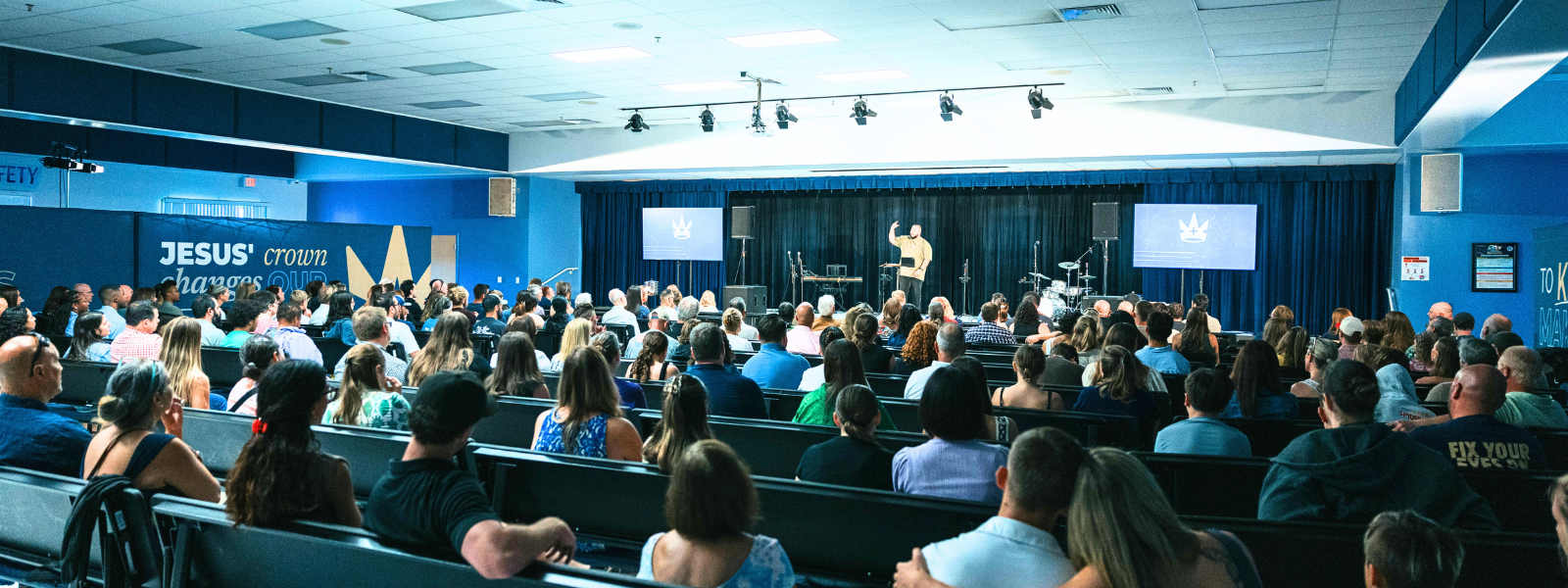
On the second Sunday of September, a school cafeteria in Odessa, Florida, became a church.
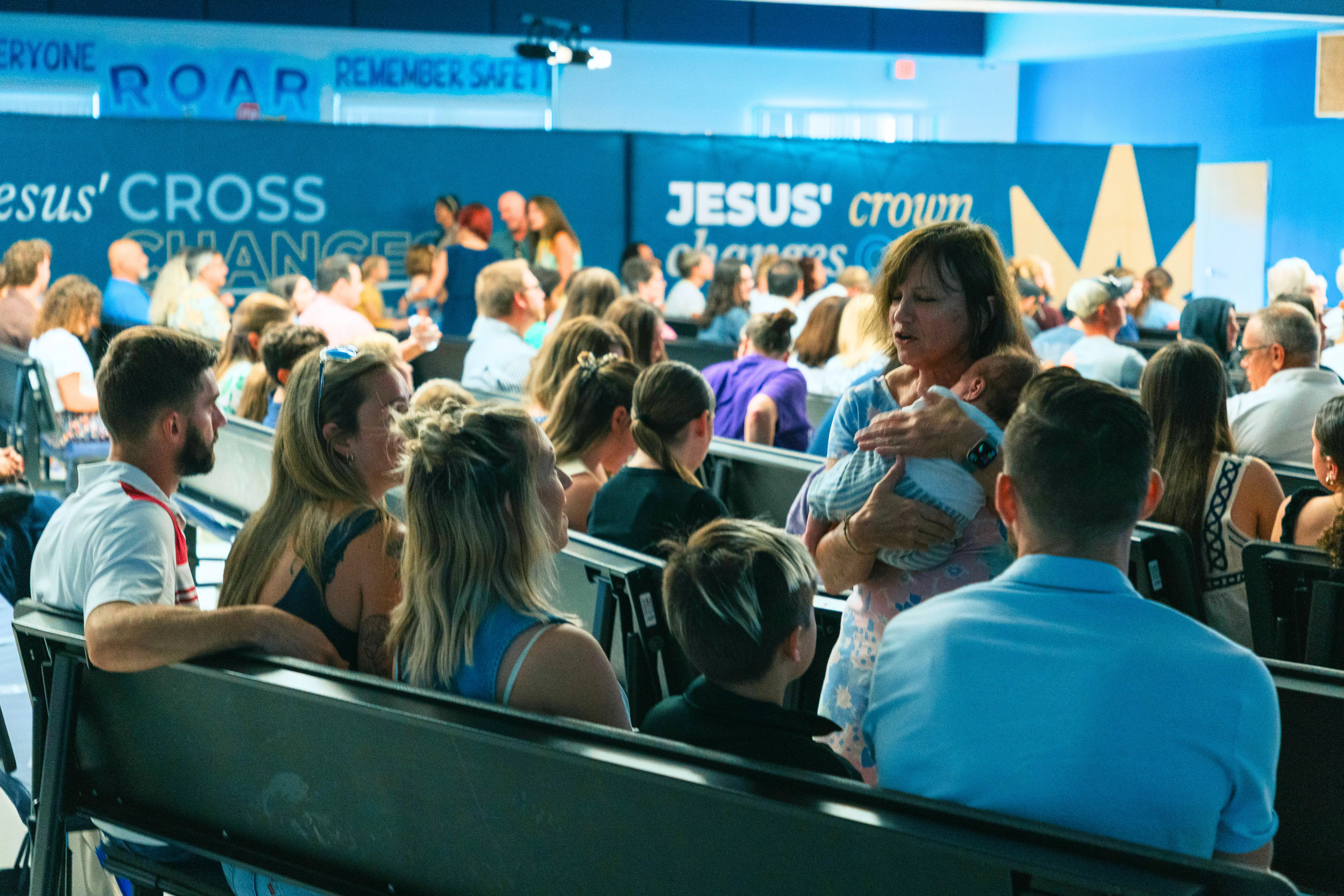
It had been a cafeteria on Friday. It would be a cafeteria again on Monday. But for a few hours on September 13, volunteers rolled in sound equipment, kids check-in stations, signs and coffee, transforming the room for the grand opening launch of Cross & Crown Church.
More than 275 people showed up!
For lead pastor Frank Gil, the scene was both new and strangely familiar. He had been working toward it for nearly two years without ever being able to picture exactly what it would look like.
“A little over a year ago, this church existed as a prayer, a burden, and a few notes scribbled down late at night in my notes app,” Frank wrote to supporters in the weeks before launch. “I could not picture the room. I could not picture the faces. I certainly could not have named the people God would send to stand with us.” That last part may be the most important.
Church planting stories can look deceptively simple when told from launch day backward. A planter had a vision. A church was started. People came. The actual story is usually much longer. It involves years of conversations and questions, people who see something in a leader before he sees it himself, a calling that has to be tested rather than merely felt, a family willing to take a risk, money that has to be raised, leaders who have to be developed and a sending church willing to give away people it could very easily keep. Cross & Crown began that way.
A seed planted years earlier
Frank did not always want to plant a church. When he was younger and first encountered the idea, he actually thought church planting was a bad one. Why start more churches, he wondered, when so many existing churches were dying or declining?
His thinking began to change as he encountered pastors and churches committed to multiplication. Voices like Matt Chandler and Tim Keller, not only explaining but demonstrating how a new church could reach people that current churches were not.
It changed even more during his years at Epikos Church in Milwaukee. When Frank originally interviewed for a youth pastor role at Epikos Church, then-lead pastor Danny Parmelee asked him an unexpected interview question: “Where do you see yourself in five years and would you ever consider planting a church?”
Frank did not have a clear answer. Church planting was one of the possibilities he was trying to discern but certainly not something he aspired to do or seriously considered. But, it was another nudge, another seed planted.
Leaders at Epikos Church continued giving him opportunities to see beyond the ministry he was leading. Frank was invited into discussions about the larger church, including conversations surrounding new campuses. Over time, others began affirming his leadership instincts and his ability to think beyond a single ministry area. Eventually, Epikos Church asked him to launch and lead a campus. “I don't think I saw it in me that I was qualified to be a campus pastor,” Frank said. “But the church saw it in me.”
The experience changed him. He learned to lead a congregation, carry broader responsibility and think about how a church reaches people beyond an existing location.
Years later, in January 2024, the old question about church planting became much more specific. Frank had spent three years as a campus pastor. This time he could see himself not simply leading another location of an established church, but planting a new church. And he knew where he wanted to do it.
Coming Home
Tampa was home. Born and raised in Tampa, a first-generation Cuban-American who played football at Jefferson High School and graduated from Trinity College of Florida, Frank had been saved in Tampa, taken his first ministry job there and gotten married there. After a decade of ministry in Milwaukee, coming back to Tampa to plant was not simply choosing a promising city or a strategic demographic opportunity. It was coming home.
“I love this place,” he said. “The people of Tampa are people I love.”
He also saw a region filled with people disconnected from church. There were good churches throughout Tampa Bay, he said, but not enough of them to reach the people who were not attending anywhere.
The desire became increasingly clear: go home and plant. Clarity did not eliminate fear.
The long runway
Frank's first concern was whether he could actually do it.
Leading a campus had given him valuable experience, but planting an autonomous church meant carrying a different level of responsibility and risk. He did not want enthusiasm or confidence to become a substitute for calling. That made assessment an important early step.
The church planter assessment process gave other experienced leaders permission to examine his calling, character, leadership and readiness. For Frank, it provided confirmation that what he had been sensing, and what others had been affirming for years, was worth pursuing.
Then another fear took its place. Fundraising.
Starting a church requires money before there are enough people in the church to provide it. Frank knew he would need to ask churches, friends, family members and people he barely knew to financially support something that did not yet exist.
“I was nervous that I wouldn’t be able to do it,” he said.
Converge's Church Planting 101, led by Chris Highfill, gave him a framework for approaching the process, and over the following months he began securing both one-time gifts and recurring support.
But fundraising was only one part of the runway. There were relationships to build, a location to secure, ministry systems to create, equipment to purchase and leaders to find. Frank and his wife, Cori, also decided early that this would not simply be Frank's ministry assignment with Cori somewhere alongside it. They were planting together.
For years, their ministry roles had largely operated in separate lanes. Church planting changed that. Cori began joining conversations with couples, potential team members and supporters.
Frank quickly discovered that she could connect with people in ways he could not.
“There are people on our launch team and people who have supported us that would not be on our launch team or would not have supported us if it wasn't for the grace and sweetness of my wife in those moments,” he said. The church was still only an idea, but more people were beginning to carry it. One of them was Pastor Tim at Lakeview Church.
When a Growing Church Gives Away Its Best
Lakeview Church in Tarpon Springs was not looking for something to do with excess people or excess money. It was growing rapidly. When Tim became lead pastor, Lakeview had roughly 100 to 110 people at its core. Over the next several years, that number climbed dramatically. One service became three. The church began running out of room and eventually started a building project to create more space. Currently over 800 people are worshipping every weekend.
Church planting had been discussed for years, but Lakeview's growth made the question more immediate. What should a healthy, growing church do with what God is giving it? One answer would have been obvious: keep it. Keep the leaders. Keep the volunteers. Keep the money. Keep building.
Instead, Lakeview began asking whether some of that growth was meant to be sent somewhere else. “We just had this conviction that we wanted to be a healthy church that didn't just grow larger, but became a church that multiplied into other healthy churches,” Tim said.
Lakeview decided against creating another campus under its own structure. Its leaders wanted to plant a fully autonomous church with its own pastor, its own elders, its own identity and its own mission.
The phrase they used was simple: build God's kingdom, not Lakeview's castle.
Then that conviction got expensive. Lakeview ultimately sent close to 50 people with Cross & Crown, including an elder, a staff member and Tim's own home group leader. The church contributed financial resources, equipment, staff time and energy while simultaneously working through its own expansion.
“It cost friends and leaders and volunteers, money, equipment, time, energy,” Tim said. “All of these people could have continued helping Lakeview grow.” Then he put it more plainly. “We didn't send out Lakeview's leftovers. We intentionally asked the best of Lakeview to be part of this.” The fears were real. Would Lakeview lose momentum? Would it suddenly have volunteer holes everywhere? Could it afford to build and plant at the same time? And after all of that sacrifice, would the new church even survive?
“You're asking people to leave something that's been built up and established and comfortable to create something that doesn't exist,” Tim said. “There's a tremendous amount of faith involved in that.”
From the outside, some people wondered whether something else was happening. Was this really a church plant or a church split? Lakeview kept answering the question with the same language.
“We're not splitting the church. We're multiplying the mission.”
For Tim, the cost became part of the point.
“If sending doesn’t cost us anything,” he said, “then we probably really didn’t send all that much.”
Interestingly, Lakeview was not a Converge church when any of this began. Frank's existing connection to Converge introduced Tim and Lakeview to the movement, but what caught Tim's attention was less the idea of joining an organization and more the support he saw and experience surrounding church planting. Through Frank's assessment, Church Planting 101, coaching and other relationships, Lakeview experienced firsthand some of the infrastructure available not only to a planter, but also to the church trying to send him well.
Tim said Lakeview was never looking for “just a denominational logo for the website.” They were looking for gospel partners who cared about the local church, shared their convictions and wanted to work together to reach more people. The planting experience ultimately became part of what led Lakeview to begin the process of affiliating with Converge, not simply because of what Converge could offer Lakeview, but because they saw a larger family of churches pursuing the same kind of multiplication they wanted to pursue.
The Value of Residency
Tim and Frank's relationship had begun years earlier through youth ministry.
Both were writing curriculum, and their friendship later deepened through the Practically Pastoring podcast. Behind the microphone, they began talking about much more than podcast episodes. They talked about church leadership, sending churches and what it might look like for Frank to plant.
When Lakeview became serious about planting, Tim went to his elders with a proposal. Before beginning a broad search, he wanted to call Frank. If Frank said no, they could start looking elsewhere. Frank said yes.
Lakeview hired him with a title that made his purpose unmistakable: Church Plant Pastor.
The residency gave Frank something many planters never receive: a residency with time to prepare in the community where he would eventually plant.
For approximately a year, Frank functioned partly as a pastor at Lakeview and partly as the lead pastor of a church that did not yet exist. He participated in staff and elder meetings, preached regularly, helped lead staff and worked through ministry systems. At the same time, Lakeview gave him freedom to attend assessment and training, raise financial support, recruit a launch team, develop Cross & Crown's vision and build relationships throughout the community.
Lakeview paid his salary as part of its regular ministry budget.
“The goal was not for him to spend a year filling a bunch of holes at Lakeview and then hopefully be ready to plant a church,” Tim said. “We literally invested in his success.”
That year allowed him to put down roots. Rather than moving into Tampa shortly before launch and immediately racing against a deadline, Frank had months to meet pastors, community leaders and business owners. Being sent from a respected local church also gave him credibility that would have taken much longer to establish on his own.
He became convinced of the value of residency.
Parachuting into a city can work, Frank said, but being given a year to live, serve and build relationships in the community creates a much stronger foundation.
.jpg)
Building a church one conversation at a time
Eventually, preparation had to turn outward. Frank began meeting as many people as possible. Cross & Crown hosted community events, men's and women's gatherings and “startup parties” in coffee shops and restaurants where people could hear about the church in a low-pressure environment. Social media advertising helped bring people into those rooms who had no connection to Lakeview. Frank also turned a local coffee shop into an unofficial office. For months, he met with hundreds of people. Some came because they had seen something online. Some were invited by friends. Some were looking for a church. Others were simply curious.
Frank told the same story again and again. Who are we? Why are we starting this church? What could it become? Those conversations became relationships. Relationships became friendships. Over time, Frank began discovering the people he had once worried he would never find. Worship leaders. Kids ministry leaders. Setup teams. People capable of carrying meaningful responsibility. One couple even moved from West Virginia after hearing Frank speak about the plant and inviting people to consider not only praying and giving, but going. Frank had included the invitation because he had been told he should. He did not actually expect anyone to take him up on it. They did!
For Frank, moments like that reinforced something church planting had been teaching him all along. Preparation matters enormously, but no strategy can manufacture the people and provision a new church ultimately needs.
What launch day cannot show
By September 13, much of that invisible work had become visible. The people were there. The teams were in place. The equipment worked. The cafeteria filled. Cross & Crown officially became a church. But some of the most significant signs of life had appeared months earlier. Before launch day, Cross & Crown had already baptized 11 people. That number matters to Frank more than a launch-day crowd.
His hope is that Cross & Crown becomes known for clearly teaching Scripture, boldly preaching the gospel and combining good theology with what he calls “unreasonable hospitality and generosity.” And he is already looking beyond Cross & Crown itself.
Within its first five years, Frank wants the church to begin helping plant other churches. In other words, he hopes to eventually give away some of the same things Lakeview gave away for him. That may be the part of the story most worth remembering. Churches rarely plant churches because they suddenly discover they have too much money, too many leaders or more volunteers than they know what to do with.
Tim's advice to pastors considering it is not to wait for that day. “You're never going to feel like you have enough to give away,” he said. Lakeview certainly did not. It was growing. It needed more space. It needed its leaders and volunteers. And it sent them anyway.
For a few hours on a Sunday morning in September, more than 275 people gathered in a school cafeteria because of it.
By Monday, the room was a cafeteria again.
But there was now a church in Odessa that had not been there before.
If you’re interested in planting a church, becoming a sending church, or hosting a church planting resident, please reach out. There’s no one right way to be part of church planting, and we’d love to help you explore what it could look like for you and your church. Contact Us!



.webp)